
When Your Panel is Telling You Something’s Wrong (And You Should Listen)
Circuit Panel Service, Repair & Inspection for Phoenix Area Homes
Your breakers are tripping more than they used to. Maybe it started with the kitchen circuit going out when you run the microwave and coffee maker at the same time, and now it’s happening with the living room and the garage too. Or you’re hearing a buzzing sound from the panel that wasn’t there before. Or you noticed a burning smell near the breaker box and you’re not sure if you’re imagining it or if it’s actually something to worry about.
You’re not imagining it. Electrical panels don’t suddenly develop personality quirks. When behavior changes, something changed. A connection worked loose, a breaker is wearing out, a circuit is pulling more load than it used to, or something inside the panel is breaking down. The question isn’t whether something’s wrong. The question is what’s wrong and how urgent it is.
Electrical Panel Installation and Upgrade Services
Most homeowners in Maricopa County call for panel service in one of three situations. Something specific broke and needs fixing now because you don’t have power to part of your house. Something’s acting weird and you want someone to check it before it becomes an emergency. Or you’re being proactive because your house is old, your panel is old, and you want to know if you’re sitting on a problem before it finds you at the worst possible time.
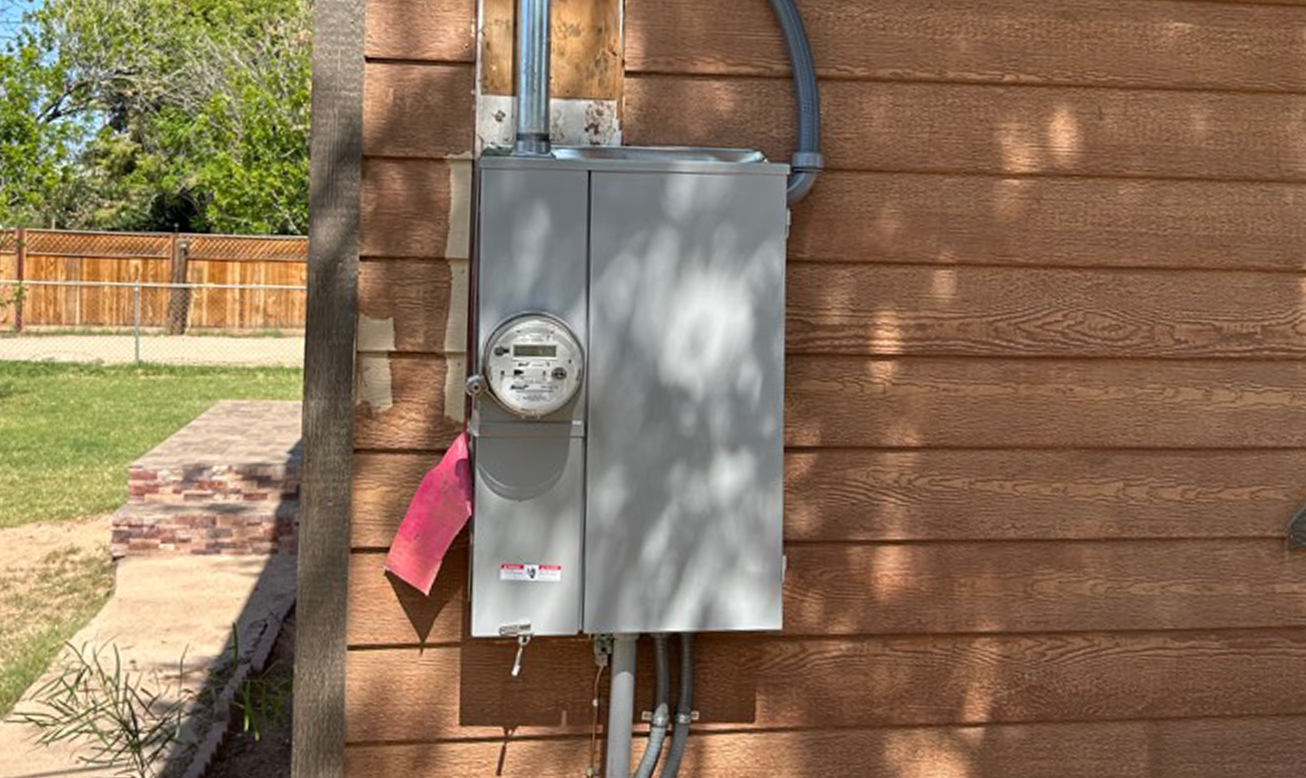
Here’s what matters in Arizona: electrical problems don’t improve on their own, and heat makes everything worse. A connection that’s slightly loose in March becomes a connection that’s arcing and overheating by July when your panel is hitting 140 degrees in direct sun. A breaker that trips occasionally becomes a breaker that won’t reset at all. Small problems become big problems, and big problems become fires or complete power loss, usually at night when it’s 110 degrees outside and you’ve got no AC.
The smart play is getting panel service before you’re in crisis mode. Because troubleshooting a weird issue during business hours on a Tuesday costs a fraction of what an emergency service call costs at 9 PM on Saturday when your panel just lost half your circuits and your house is heating up fast.
What Actually Goes Wrong With Circuit Panels (The Real Problems)
Breakers wear out. They’re mechanical devices that open and close thousands of times over their lifespan. Every time a breaker trips, the internal mechanism operates under stress. After enough cycles, the spring tension weakens, the contacts wear, and the breaker either trips too easily or doesn’t trip when it should. A breaker that trips too easily is annoying. A breaker that doesn’t trip when it should is dangerous because it allows overcurrent conditions that can start fires.
Here’s how this shows up in real life. You’re in Chandler, your house was built in 1995, and the breaker for your master bedroom has tripped three times in the past month. Nothing’s changed in the room. You’re not running different equipment. The breaker just started tripping randomly. That’s a failing breaker. The internal mechanism is worn and it’s tripping at current levels below its rated capacity. The fix is replacing the breaker, which is straightforward if you have a standard panel. If you have an obsolete panel where replacement breakers aren’t available, you might be looking at panel replacement.
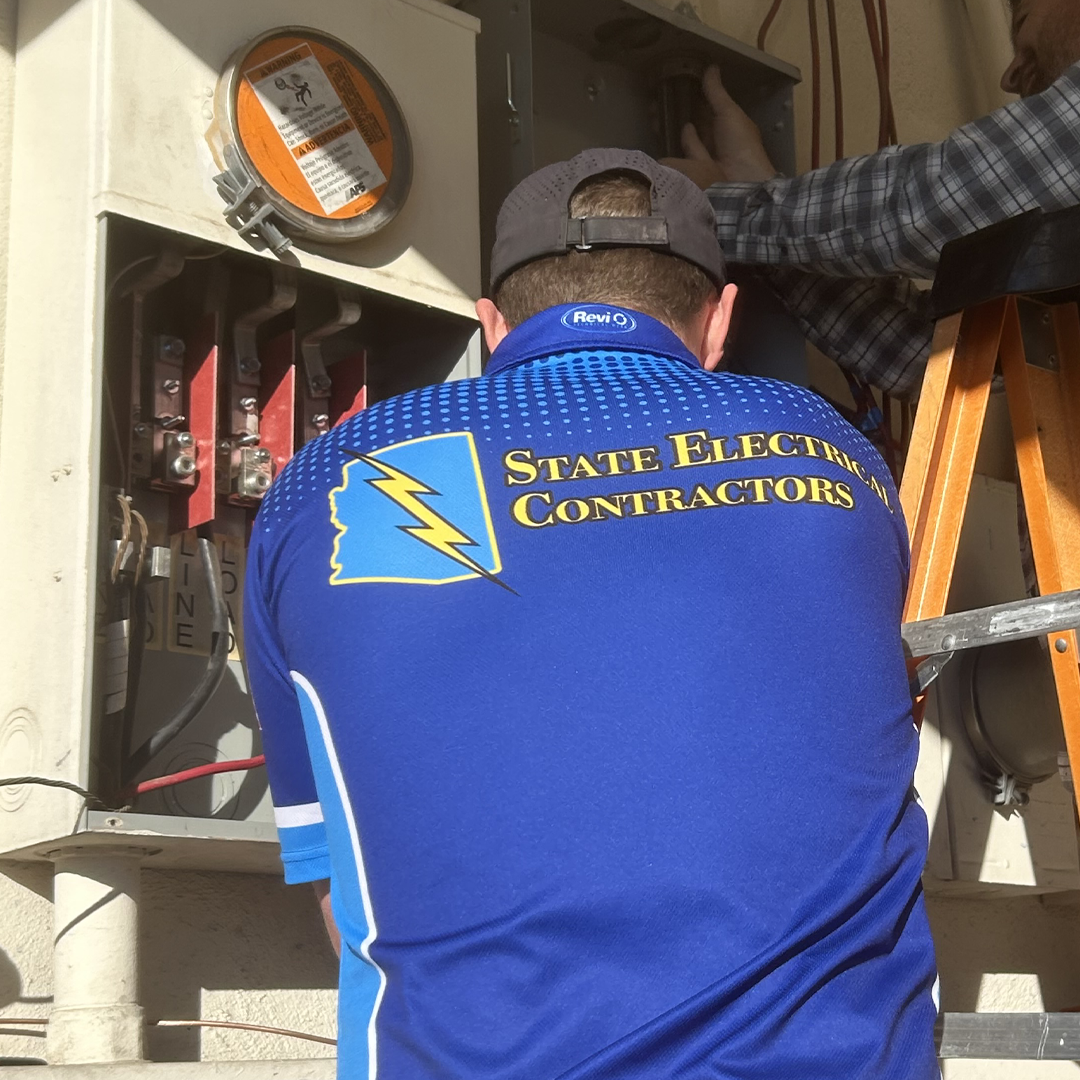
Connections work loose over time. Every connection in your panel experiences thermal cycling. When current flows, connections heat up. When current stops, they cool down. This happens constantly, and over years, the expansion and contraction can work connections loose. A loose connection creates resistance, and resistance creates heat. That heat accelerates the loosening, and eventually you’ve got a connection that’s hot enough to damage insulation, melt wire, or arc. Arcing connections are fire starters.
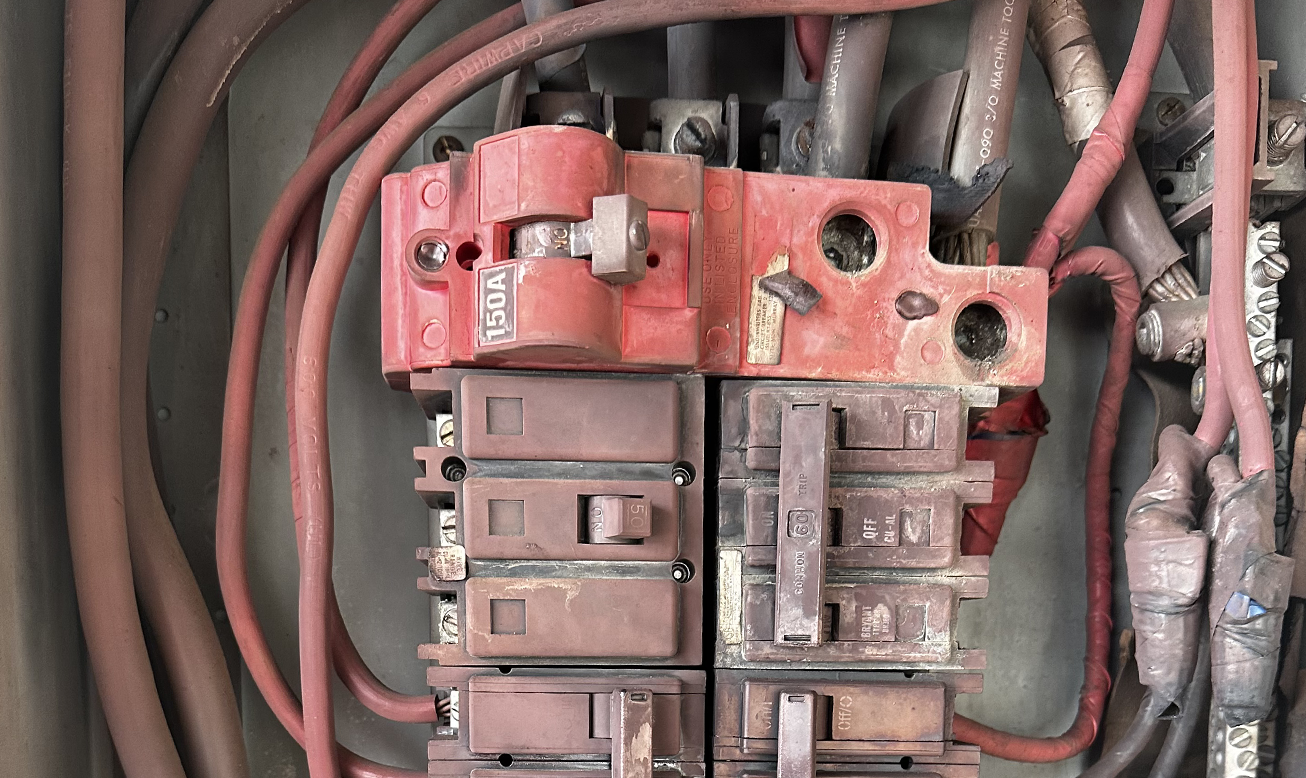
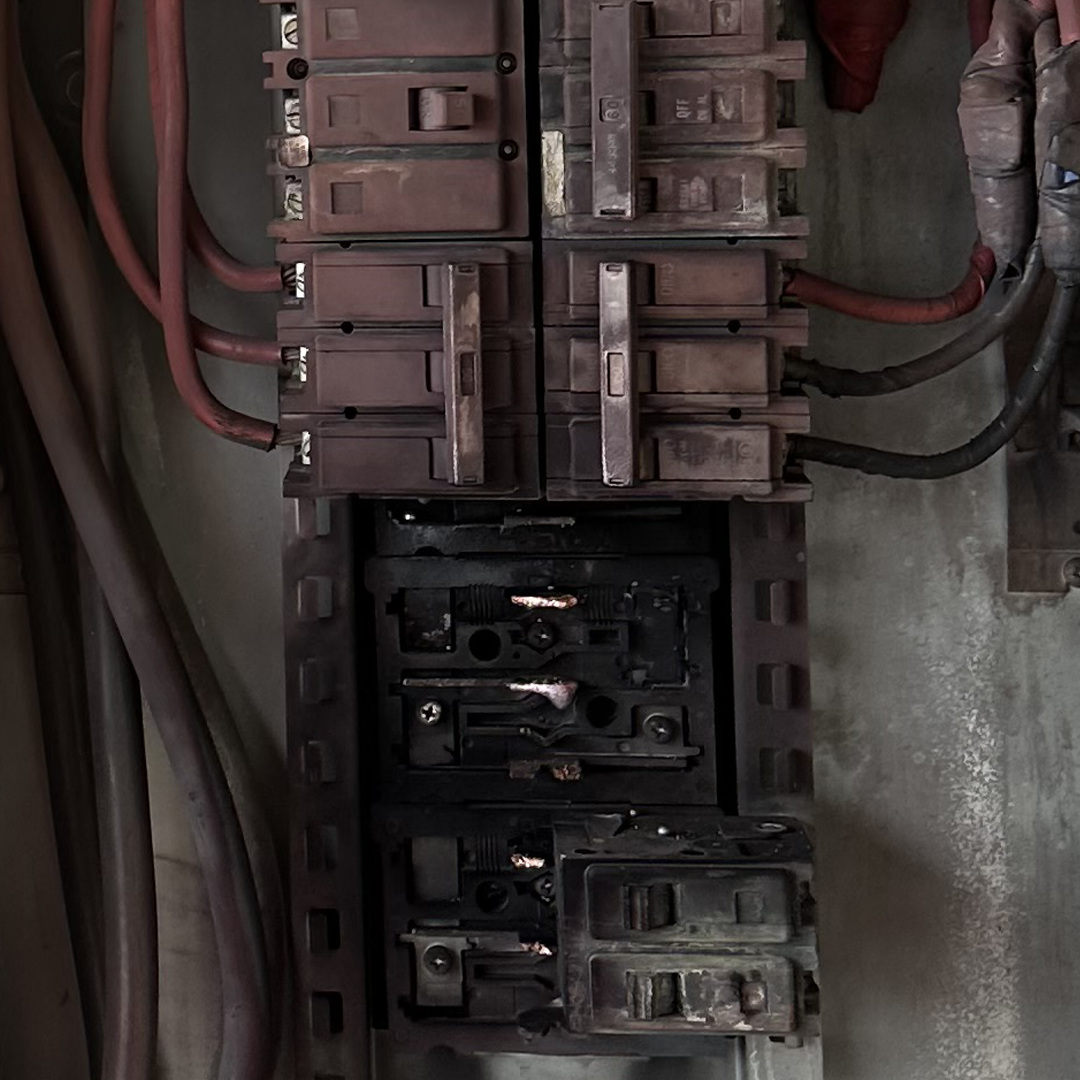
You can sometimes identify loose connections by symptoms. Flickering lights that affect multiple fixtures on the same circuit suggest a problem at the panel. A circuit that works intermittently, especially when you jostle the panel or when temperature changes significantly, indicates a loose connection. Discoloration or scorch marks on breakers or the panel interior are dead giveaways that something’s been getting hot. If you see black or brown marks on or around breakers, call an electrician immediately. That’s evidence of overheating, and it doesn’t fix itself.
Corrosion happens in Arizona despite the dry climate. Monsoons bring humidity spikes, dust storms carry conductive particles, and outdoor panels get moisture intrusion through worn gaskets and seals. Once moisture gets inside the panel, it combines with dust to create conductive paths and accelerates corrosion on bus bars, breaker contacts, and wire connections. Corroded connections have high resistance, which creates heat, which accelerates the corrosion. It’s a cycle that ends with failures.
Corrosion shows up as green or white deposits on copper connections, flaky rust on steel components, or a powdery residue on aluminum bus bars. In advanced cases, you’ll see pitting and material loss on the metal surfaces. Corroded connections need to be cleaned or replaced depending on severity. Surface corrosion can sometimes be cleaned and treated. Deep corrosion that’s compromised the integrity of the conductor or connection point requires replacement.
Overloading is common in older homes. Your panel was sized for the electrical loads that existed when your house was built. Add a second AC unit, a hot tub, an EV charger, a home office full of computers and equipment, and suddenly you’re asking your panel to distribute more power than it was designed for. The panel doesn’t upgrade itself. You’re running at or near capacity constantly, and breakers trip more frequently because they’re doing their job, protecting circuits that are legitimately overloaded.
The fix for overloading isn’t replacing breakers with higher-rated breakers. That’s dangerous and violates code because now you’re allowing more current through wire that isn’t rated for it. The correct fix is either redistributing loads across different circuits, adding circuits to reduce the load on overloaded circuits, or upgrading to a higher-capacity panel if you’ve legitimately outgrown your existing service.
Aluminum wiring issues plague homes built in the 1960s and 1970s. Aluminum wire was common during that era because of copper shortages and cost. Aluminum is safe when properly installed and maintained, but it has characteristics that create problems. It oxidizes at connections, and that oxidation increases resistance. It expands and contracts more than copper with temperature changes, which works connections loose faster. And it’s softer than copper, so it’s easier to damage during installation or maintenance.
If your house has aluminum wiring and you’re experiencing frequent breaker trips, flickering lights, or warm outlet covers, have an electrician inspect the panel connections. Aluminum requires anti-oxidant compound on all connections and specific torquing. Connections made without proper technique fail over time. The fix usually involves cleaning connections, applying anti-oxidant compound, properly torquing terminals, and potentially replacing damaged wire or connections.
Bus bar problems happen in older panels or panels that have experienced significant overheating. The bus bars are the metal strips inside your panel that distribute power to the breakers. They’re under constant electrical and thermal stress. Over time, particularly in panels that run hot or have had sustained overload conditions, bus bars can develop cracks, corrosion, or lose their mechanical tension. Breakers that don’t seat firmly into the bus bar create poor connections that overheat.
You can’t easily inspect bus bars without opening the panel and removing breakers, which is work for a licensed electrician. Signs that suggest bus bar problems include multiple breakers on the same side of the panel that are running hot, breakers that don’t snap firmly into position, or breakers that have visible arcing damage at the connection point. Bus bar issues often require panel replacement because repairing or replacing bus bars isn’t cost-effective.
The Service Call: What Actually Happens When You Call an Electrician
You call because something’s wrong. Maybe a breaker won’t reset, maybe half your house lost power, maybe you’re seeing or smelling something that worries you. You describe the problem, the electrician asks questions to understand what’s happening, and they schedule a service call. For non-emergency issues during business hours, you’ll usually get a same-day or next-day appointment. For emergencies, most electricians offer same-day service, though evening and weekend calls typically carry premium pricing.
The electrician shows up and starts with diagnosis. They’ll ask you to describe what happened, when it started, whether anything changed recently, and what symptoms you’re experiencing. They’ll look at your panel, check for obvious issues like tripped breakers or visible damage, and start testing. A multimeter comes out to check voltage at various points in the panel. They’re looking for proper voltage at the main service, balanced voltage across both legs of your 240-volt service, and correct voltage at individual breakers.
Testing individual circuits identifies problems. If a breaker keeps tripping, the electrician tests the circuit to determine whether it’s a problem with the breaker itself, an overload on the circuit, or a short circuit somewhere downstream. They’ll disconnect the circuit from the breaker and test for shorts. They’ll measure the current draw under load to see if the circuit is legitimately overloaded. They’ll check the breaker’s mechanical operation to see if it’s functioning properly. This process narrows down where the problem is.
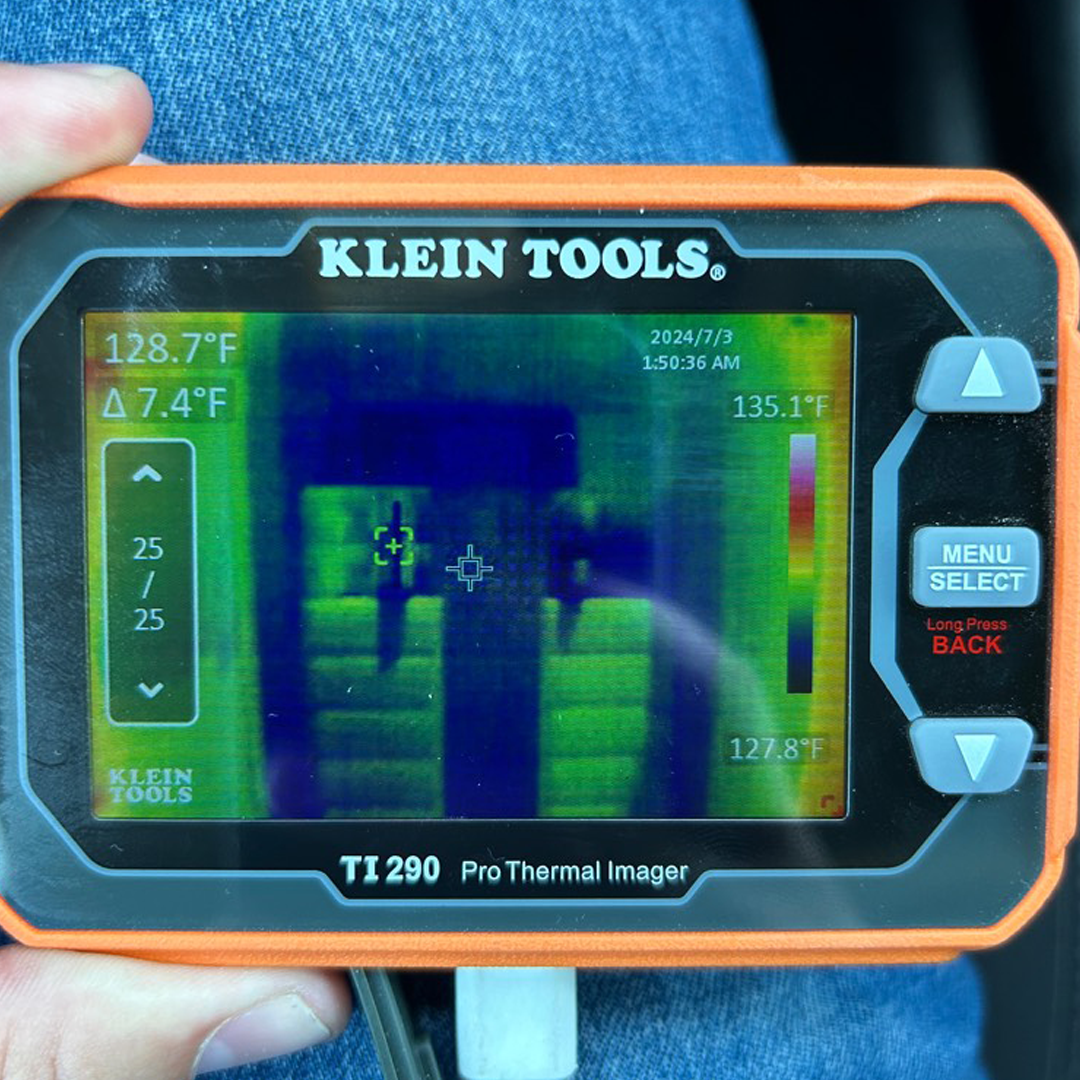
Thermal imaging has become standard practice for quality panel inspections. Infrared cameras show hot spots that aren’t visible to the naked eye. A connection that’s running 20-30 degrees hotter than surrounding connections shows up clearly on thermal imaging. This identifies developing problems before they become failures. Many electricians include thermal imaging in service calls because it provides information that visual inspection alone can’t reveal.
You’ll see the electrician open the panel cover, which is when they get a good look at the interior condition. They’re checking for signs of overheating like discolored insulation or scorch marks, evidence of arcing like pitting on bus bars or breaker contacts, corrosion on connections, and the overall condition of components. A well-maintained panel that’s been running properly looks clean with bright metal connections and intact insulation. A panel that’s been struggling shows wear, discoloration, and damage.
The diagnosis leads to recommendations. If a breaker is bad, the fix is replacing the breaker. If connections are loose, the fix is tightening and securing them properly. If you’ve got corrosion, the fix is cleaning or replacing affected components. If your panel is overloaded, the fix might be redistributing circuits, adding a sub panel, or upgrading to higher capacity. The electrician should explain what they found, what needs to be done, and why. They should give you options when options exist.
Cost for service calls varies by what’s wrong. A simple breaker replacement might run $150-$300 including the service call, diagnosis, and new breaker. Tightening connections and general maintenance might run $200-$400 depending on how much work is needed. More complex repairs like replacing damaged wiring or addressing multiple failing components cost more. Emergency service calls outside business hours typically add $100-$200 to the base cost.
Some problems can’t be fixed with service. If your panel is severely corroded, if multiple breakers are failing, if the bus bars are damaged, or if your panel is an obsolete brand where parts aren’t available, replacement becomes the more practical solution than ongoing repairs. A good electrician will tell you honestly when you’re past the point where service makes financial sense. Putting $500 into repairing a 35-year-old panel that’s going to need more repairs next year doesn’t make sense when a new panel costs $3,000 and solves all the problems permanently.
The Emergency Service Call You Hope You Never Need
Power outages in Arizona aren’t just inconvenient, they’re dangerous. When it’s 115 degrees outside and you lose power to your AC, your house becomes uninhabitable fast. Interior temperatures climb into the 90s within a couple of hours. Refrigerated food starts spoiling. If you’ve got medical equipment that requires power, you’ve got a time-critical situation. This is when people call for emergency panel service.
Emergency calls happen outside normal business hours. Your panel loses half its circuits at 8 PM on Saturday, or your main breaker trips and won’t reset at 6 AM on Sunday, or you come home from vacation to find no power and a panel that smells like burning plastic. Emergency service exists because electrical problems don’t respect business hours, but it costs more. Electricians charge premium rates for after-hours calls because they’re pulling someone away from their evening, weekend, or time with family.
Expect to pay $200-$400 more for emergency service compared to regular service calls. That’s on top of the cost for actual repairs. If a regular service call costs $250 and the emergency premium is $200, you’re paying $450 just to get someone there, plus whatever the repair costs. Is it worth it? That depends on your situation. If you’ve got no AC in July and your house is heating up, yes, it’s worth it. If one circuit is out and you can live without it until Monday morning, probably not.
Some emergency situations require immediate action regardless of cost. A panel that’s actively arcing or smoking is a fire in progress. Your first call is 911, not an electrician. Get everyone out of the house, shut off the main breaker if you can do so safely, and let the fire department handle it. Once the immediate danger is controlled, then you call an electrician to assess damage and make repairs. A burning smell from the panel that’s not currently smoking might not require 911, but it does require an immediate electrician call because you’re potentially minutes or hours away from active fire.
Power loss to your entire house is another immediate-action situation, especially in extreme weather. If your main breaker trips and won’t reset, that’s potentially a fault in your main service or a failure in the panel itself. You need diagnosis fast because you need to know whether it’s something that can be fixed quickly or whether you’re looking at extended outage. Many electricians prioritize complete loss-of-power calls over partial outages because they understand the urgency.
Partial outages are judgment calls. If you lost power to half your house, you need to consider which half. If it’s bedrooms and living areas with AC, that’s more urgent than losing power to the garage and outdoor outlets. If you’ve got food in a freezer that’s without power, you’ve got hours before it starts thawing. If you’ve got elderly family members or young children in the house and no AC in summer, that’s urgent. The electrician will usually ask about your situation when you call for emergency service so they can prioritize appropriately.
What electricians can fix during an emergency call versus what requires follow-up depends on diagnosis. Simple breaker replacements can usually be done on the spot if the electrician carries common breaker types. Tightening connections or resetting tripped equipment can be done immediately. But if your panel needs replacement or if repairs require extensive work, the emergency call might stabilize the situation and restore basic power with follow-up work scheduled for normal business hours. Emergency calls are about getting you functional, not necessarily about permanent solutions if those solutions require extensive work.
Proactive Service: Catching Problems Before They Find You
Most people only think about their electrical panel when something goes wrong. But proactive service exists for a reason. Annual or biannual inspections catch developing problems before they become failures. A loose connection found during an inspection gets tightened during the same visit. The same connection found after it’s caused a fire gets fixed after you’ve filed an insurance claim and lived through a disaster.
Inspection service makes sense in specific situations. If your house is over 20 years old and you’ve never had the panel inspected, schedule an inspection. If you’ve recently purchased a home and the inspection report noted concerns about the electrical system, get a detailed evaluation by a licensed electrician. If you’ve experienced any unusual electrical issues like flickering lights, frequent breaker trips, or burning smells, inspection identifies whether there’s an underlying problem.
Thermal imaging inspection has become the standard for quality service. Infrared cameras detect hot spots that visual inspection misses. A connection that’s starting to fail shows up as elevated temperature compared to surrounding connections. This gives you advanced warning before the connection fails completely. Thermal imaging inspections typically cost $200-$400 depending on the thoroughness and whether they’re combined with other service.
What gets checked during a comprehensive inspection: visual condition of the panel and breakers, tightness of all connections, proper operation of circuit breakers, voltage levels at main and individual circuits, condition of grounding system, signs of moisture intrusion or corrosion, thermal imaging of all connections and components under load, proper labeling and circuit identification, and overall capacity versus current load. The electrician should provide a written report documenting findings and recommendations.
Maintenance service extends panel life. Tightening connections that have worked slightly loose, cleaning corrosion before it becomes severe, replacing a breaker that’s starting to wear before it fails completely, these actions prevent bigger problems. Maintenance costs are typically $200-$500 depending on what’s needed, which is far less than emergency repairs or panel replacement. Think of it as cheap insurance against expensive failures.
Some homeowners schedule regular maintenance every 3-5 years as preventive care. Others call for service when they notice something unusual or after significant electrical work has been done. There’s no universal schedule that fits every situation, but older panels in older homes benefit from more frequent attention. A panel from the 1980s probably needs inspection every 2-3 years. A panel from 2010 might be fine with inspection every 5 years or when you notice issues.
Code compliance checks identify whether your existing panel meets current codes. Code changes over time, and older panels were installed to earlier standards. While you’re not usually required to upgrade unless you’re doing major remodeling, knowing where your panel stands relative to current code helps you make informed decisions. If you’re planning to sell soon, a code compliance check tells you what a buyer’s inspector will flag. If you’re planning major additions or renovations, it tells you whether your existing panel can support the work or needs upgrading first.
When Service Finds Bigger Problems Than Expected
Sometimes you call for service on a specific issue and the electrician discovers additional problems. You thought you needed a breaker replaced, but inspection reveals corrosion on multiple connections and signs of chronic overheating. Or you called about flickering lights and it turns out your panel is running near capacity and several circuits are overloaded. This is when cost estimates change and decisions get more complicated.
Honest electricians explain what they found, why it matters, and what your options are. They should show you the problems when possible. Scorch marks, corroded connections, and damaged components are visible evidence. Thermal imaging provides documentation of hot spots. You’re not taking their word for it, you’re seeing the actual condition. They should explain the urgency, what happens if you don’t address it, and what the fix costs.
You’ve got options when additional problems surface. Fix everything now while the electrician is there and the panel is open. Fix the urgent issues now and schedule non-urgent work for later. Get a second opinion if the scope has expanded significantly from what you expected. Decline the additional work and accept the risk. A good electrician respects your decision without pressure, though they’ll document what was found and what was recommended if you decline necessary repairs.
The “while we’re here” conversation is legitimate for some work and questionable for other work. If the electrician has your panel open to replace a breaker and discovers loose connections, tightening those connections makes sense to do immediately. It adds minimal time and cost, and it prevents future problems. But if they’re suggesting replacing your entire panel when you called for a simple service issue, that warrants careful consideration and possibly a second opinion. Panel replacement might genuinely be the right answer, but it’s a big enough decision that you should be comfortable with the diagnosis and recommendation.
Cost overruns happen when problems aren’t visible until the panel is opened and diagnosed. An electrician who quotes $200 for a service call can’t predict what they’ll find. If they discover problems that need addressing, the cost goes up. This isn’t necessarily dishonest, it’s reality. But the electrician should explain what changed, show you what they found, and get your approval before doing additional work beyond the initial service call. You shouldn’t get surprised with a bill that’s triple the quote without having been consulted.
Documentation matters when additional problems are found. Ask for photos of issues, thermal imaging results if applicable, and a written explanation of what’s wrong and what’s recommended. This documentation is valuable if you get a second opinion, if you need to make decisions about repairs versus replacement, or if you end up filing an insurance claim. Good electricians document their findings as a matter of standard practice.
The “Should I Repair or Replace” Conversation
This decision comes down to economics and safety. If your panel is relatively modern, in good overall condition, and the problems are isolated to specific components like a failing breaker or loose connections, repair makes sense. If your panel is old, showing signs of deterioration in multiple areas, or if you’re facing repeated repairs, replacement becomes the smarter investment.
Age matters but it’s not the only factor. A well-maintained panel from 1990 might be in better condition than a neglected panel from 2005. But generally, panels over 25-30 years old are reaching the point where replacement makes more sense than ongoing repairs. Components wear out, connections deteriorate, and technology has improved. Modern panels with AFCI and GFCI protection offer safety features that older panels don’t have.
Cost comparison guides the decision. If repairs cost $500-$800 and your panel is 15 years old in good overall condition, repairs make sense. If repairs cost $1,200 and your panel is 30 years old with visible corrosion and outdated breakers, spending $3,000 to replace the panel gives you a modern, code-compliant system that won’t need attention for decades. The break-even point is usually around 30-40% of replacement cost. If repairs approach half the cost of replacement, replacement becomes the better value.
Multiple service calls indicate systemic problems. If you’ve had an electrician out three times in two years for different panel issues, your panel is telling you it’s worn out. Each service call costs money, and the problems will continue. Replacement eliminates the ongoing issues and gives you predictable, reliable service. You stop playing whack-a-mole with electrical problems.
Insurance and resale considerations factor in. Some insurance companies won’t cover homes with certain panel brands or panels over a certain age. If your insurance company is flagging your panel as a concern, that’s a strong indicator that replacement makes sense. When you sell, buyers will have the home inspected, and a 35-year-old panel with visible issues will show up in the inspection report. You’ll either negotiate price reduction, pay for replacement, or lose buyers who don’t want to deal with it. Proactive replacement on your timeline is usually preferable to forced replacement during a sale.
Safety should override economics. If your panel has Federal Pacific or Zinsco breakers, replacement isn’t optional regardless of age or condition. The documented failure rates on these brands make them uninsurable risks. If you’ve got extensive corrosion, signs of significant overheating, or damaged bus bars, those are safety issues that repairs can’t adequately address. The cost of replacement is trivial compared to the cost of fire damage or injury.
What Service Should Cost (And What You’re Actually Paying For)
Service call pricing varies by company and what’s included. A basic diagnostic service call typically costs $125-$250. That gets an electrician to your house, time to diagnose the issue, and a report of what they found. Some companies waive the service call fee if you proceed with recommended repairs. Others charge the service call regardless. Clarify the pricing structure when you schedule.
Breaker replacement is straightforward work that typically costs $150-$300 total including the service call and new breaker. Standard breakers are inexpensive, $5-15, so most of the cost is labor and the service call. AFCI or GFCI breakers cost more, $35-80 each, which increases the total. If you need multiple breakers replaced, some electricians offer volume pricing that reduces per-breaker cost.
Connection tightening and maintenance runs $200-$400 depending on thoroughness. The electrician is opening your panel, checking every connection, tightening anything that’s loose, cleaning minor corrosion, and generally ensuring everything is secure and proper. This work prevents future problems and is money well spent on older panels. It’s not exciting work that produces visible before-and-after changes, but it’s valuable preventive maintenance.
Thermal imaging inspection adds $150-$300 to a service call. The equipment is expensive and requires training to interpret correctly. What you’re paying for is advanced diagnostic capability that identifies problems invisible to standard inspection. If you’re evaluating an older panel, considering a large purchase, or troubleshooting intermittent issues, thermal imaging provides information worth the cost.
Emergency service carries premiums. Evening calls typically add $100-$150. Weekend calls add $150-$200. Holiday calls add $200-$300. These premiums are standard across most service industries. You’re paying for convenience and immediate response. The alternative is waiting until normal business hours, which might or might not be acceptable depending on your situation.
Extensive repairs increase cost proportionally. If you need multiple breakers replaced, extensive connection work, corrosion cleaning, and repairs to damaged wiring, costs can run $600-$1,200 or more. At this point, you’re approaching territory where panel replacement might make more sense. A good electrician will discuss this with you and help you make an economically rational decision.
What you’re actually paying for beyond the physical work: expertise to diagnose correctly, knowledge of code requirements, proper tools and equipment, insurance and licensing that protects you, and accountability if something goes wrong. A licensed electrician costs more than a handyman or unlicensed worker, but you’re getting professional service with recourse if there are issues. Given that electrical work involves fire and shock hazards, professional service is worth the cost.
Finding an Electrician for Service Work
Service work requires different skills than installation work. A great new-construction electrician might not be as good at diagnosis and troubleshooting. You want an electrician who regularly does service calls, who’s experienced with older panels and common failure modes, and who can diagnose problems efficiently. Spending three hours on diagnosis before fixing a problem that could have been identified in 30 minutes costs you money.
Questions to ask when calling for service: How quickly can you schedule a service call? What’s your diagnostic fee and is it waived if I proceed with repairs? Do you offer emergency service and what’s the premium? Are you experienced with [your panel brand] panels? Do you provide thermal imaging inspection? Can you provide a written report of findings? What payment methods do you accept?
Response time matters more for service work than installation work. When something’s broken, you need someone who can get there quickly. Electricians who specialize in service work typically offer same-day or next-day appointments for non-emergency issues and same-day response for emergencies. Installation-focused electricians might be booked weeks out and not set up for rapid response.
Reviews and reputation matter heavily for service work. You’re calling someone to fix a problem, possibly in an emergency situation, and you need confidence they’ll diagnose correctly and fix it right. Check online reviews focusing on service work specifically, not just installation projects. Look for comments about response time, accurate diagnosis, reasonable pricing, and quality of work.
Flat-rate pricing versus time-and-materials is a philosophical difference between electricians. Flat-rate companies quote a fixed price for specific repairs based on a pricing book. Time-and-materials companies charge hourly rates plus materials. Both approaches can be fair or unfair depending on execution. Flat-rate can be expensive for simple jobs but provides price certainty. Time-and-materials can be economical for simple jobs but uncertain for complex diagnosis. Know which approach your electrician uses and make sure you’re comfortable with it.
Beware of upselling during service calls. Some companies train their electricians to find and recommend additional work on every service call. This isn’t inherently wrong if the recommendations are legitimate, but it can cross into unethical territory if electricians are pushing unnecessary work. A good electrician recommends work that genuinely needs doing and can explain why. A pushy electrician creates urgency around recommendations that might not be urgent and makes you uncomfortable declining.
Get quotes in writing for any significant work. If a breaker replacement is $200, a verbal quote is probably fine. If you’re looking at $1,500 in repairs, get a written quote that details what work is being done and what it costs. Written quotes protect both parties and prevent misunderstandings about scope and price.
What You Get From Regular Panel Service (Beyond Just Working Electricity)
Reliability is the primary benefit. Regular service catches problems before they cause failures. You’re not dealing with unexpected outages, emergency service calls at inconvenient times, or the stress of not knowing whether your electrical system is about to fail. You have confidence that your panel is in good condition and will keep working.
Safety improvements happen incrementally. Each service visit that tightens connections, cleans corrosion, or replaces worn components reduces fire and shock risk. These aren’t dramatic changes you can point to, but cumulatively they matter. Electrical fires often start from deteriorated connections that could have been caught during routine service. Preventing that one fire justifies the cost of regular service many times over.
Avoiding emergency costs is valuable. A $300 service call during business hours beats a $600 emergency call at 10 PM on Saturday. Catching a failing breaker during routine service and replacing it for $200 beats having it fail at the worst possible time and paying emergency rates to fix it. The economics favor proactive service over reactive emergency response.
Insurance benefits exist for well-maintained systems. While insurance doesn’t pay for routine maintenance, having documentation that your electrical system is properly maintained can be valuable if you ever have a claim. Insurance adjusters look more favorably on homeowners who’ve taken reasonable steps to maintain their property. And some insurance companies offer premium discounts for homes with documented electrical system maintenance.
Resale value improves with maintenance records. When you sell, being able to show a buyer that your electrical panel has been regularly serviced and is in good condition is valuable. It answers questions before they’re asked and gives buyers confidence that they’re not inheriting electrical problems. A home with documented maintenance history commands premium prices over comparable homes without that documentation.
Peace of mind might be the most underrated benefit. Knowing your panel is in good condition and not a fire hazard waiting to happen is valuable. You’re not wondering if that sound from the garage is the panel or something else. You’re not worried every time a breaker trips that it’s the start of a bigger problem. You have one less thing to stress about in homeownership, which is worth something even if it’s hard to quantify.
The Maintenance Schedule That Actually Makes Sense
There’s no universal maintenance schedule that fits every panel and every situation. But here are guidelines based on age, condition, and usage that apply to most homes in Maricopa County.
New panels less than 10 years old in homes without unusual electrical issues probably need inspection every 5 years. These panels are modern, they’re not showing wear yet, and problems are unlikely. Annual inspection is overkill unless you’re experiencing specific issues. But every 5 years, have an electrician do a visual inspection, check connections, and verify everything is functioning properly.
Panels 10-20 years old benefit from inspection every 3 years. You’re in the middle of the lifespan where components can start showing wear but major failures are still uncommon. Every 3 years catches developing issues before they become problems. This is also when you want thermal imaging included in the inspection because it identifies hot connections that visual inspection misses.
Panels over 20 years old should be inspected every 1-2 years. You’re in the zone where components are legitimately wearing out and failures become more common. Annual or biannual inspection catches problems early and helps you make informed decisions about when to schedule replacement. You’re also accumulating documentation of the panel’s condition, which is valuable for insurance and resale.
Federal Pacific or Zinsco panels should be scheduled for replacement, not maintained. These brands have documented safety issues that maintenance doesn’t fix. If you have either brand and you’re not ready to replace immediately for financial reasons, at minimum have the panel inspected annually and don’t delay replacement longer than necessary. Every year you continue using these panels is a year of unnecessary risk.
After major electrical events, schedule immediate inspection. If your house was hit by lightning, if you experienced a significant power surge, if you had a utility issue that caused voltage spikes, have your panel inspected. Surge events can damage breakers, degrade connections, and create problems that won’t show up immediately but will cause failures later. Inspection after a surge event catches this damage early.
When you experience changes in electrical behavior, schedule service immediately rather than waiting for the next regular inspection. Breakers that start tripping frequently, lights that flicker, sounds from the panel, or any unusual electrical behavior indicates something changed. Waiting until your next scheduled inspection could mean waiting while a problem gets worse. Service calls for specific issues don’t follow a schedule, they follow symptoms.
FAQ: Circuit Panel Service & Repair
01 Circuit Panel Installation
New panel installations, full replacements
Complete Panel Replacement & New Installation Description: Upgrading from an outdated 100-amp fuse box? Building an addition? We handle full panel replacements and new installations that meet 2024 NEC codes. Arizona’s extreme heat demands panels built to last.
02 Sub Panel Installation
Expand Your Power with Sub Panel Solutions
Add power where you need it with clean, code-compliant sub panels for garages, additions, and outdoor spadding a workshop, pool equipment, or converting your garage? Sub panels distribute power exactly where you need it without overloading your main system. Perfect for Maricopa County home additions and outdoor spaces.ces.
